Enhancing LaTeX Writing Workflows with AI
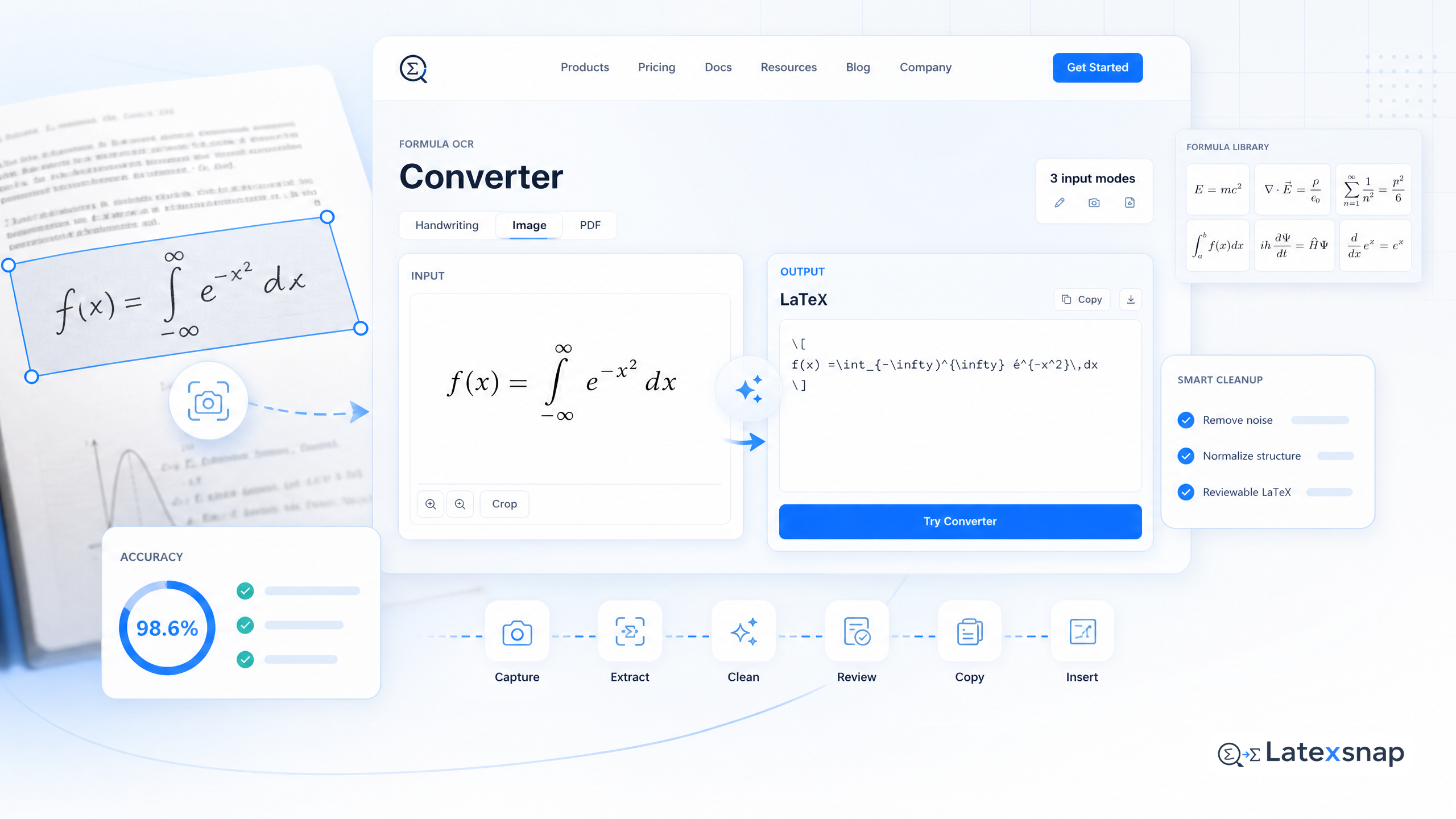
LaTeX has long been the gold standard for academic and technical writing, offering unparalleled precision in formatting complex equations, tables, and references. However, even seasoned users often face challenges when integrating new content into their documents. Whether it's deciphering a handwritten formula or converting a scanned document into editable LaTeX code, these tasks can slow down the writing process. Enter AI-powered equation OCR tools like LatexSnap, which are transforming how researchers, students, and technical writers approach their workflows. A useful companion workflow is LaTeX vs word processors: Which Is Better for Academic Writing?, especially when LaTeX editing workflow becomes part of the review process.
Streamlining Equation Integration
One of the most time-consuming aspects of LaTeX writing is manually transcribing equations. Whether you're working from a textbook, a lecture note, or a research paper, the process of converting an image into LaTeX code can be tedious. LatexSnap simplifies this by using advanced OCR technology to instantly convert images of equations into editable LaTeX code. This not only saves time but also reduces the likelihood of errors, ensuring that your mathematical expressions are accurate and properly formatted. For a related next step on LatexSnap workflow, see How to Edit LaTeX with AI in a research writing workflow.
For instance, imagine you're working on a physics paper and need to include a complex integral from a textbook. Instead of manually typing out the equation, you can simply take a photo or upload an image of the formula to LatexSnap. Within seconds, the tool generates the corresponding LaTeX code, which you can then copy and paste directly into your document. This seamless integration allows you to focus on the content rather than the formatting.
Enhancing Productivity with AI
Beyond equation conversion, AI-powered tools like LatexSnap offer a range of features that enhance overall productivity. For example, the ability to extract templates from sources like arXiv can significantly speed up the setup of new documents. By automatically formatting research templates, users can quickly establish a professional structure for their papers, allowing them to dive straight into writing. When the document pipeline gets more complex, How to Keep Citations and LaTeX Equations Organized in Research Notes gives more context on citation and equation notes.
Moreover, AI-driven tools can help identify and correct common LaTeX errors, such as mismatched brackets or improperly formatted references. This not only improves the quality of the final document but also reduces the time spent on debugging and revision. For students and researchers juggling multiple deadlines, these efficiencies can make a significant difference in meeting project timelines.
Overcoming Challenges in Academic Writing
Despite the many advantages of LaTeX, certain challenges persist. One common issue is dealing with ambiguous symbols or poorly cropped images, which can confuse OCR tools. To mitigate this, users should ensure that their images are high-quality and properly cropped before uploading them to LatexSnap. Clear, well-defined equations yield more accurate results, reducing the need for manual corrections. If you want to compare this with another practical angle, Writing LaTeX Math Equations with AI covers formula OCR workflow in more detail.
Another challenge is the learning curve associated with LaTeX itself. While the tool offers unparalleled control over document formatting, mastering its syntax can be daunting for beginners. AI-powered assistants can help bridge this gap by providing real-time suggestions and corrections, making it easier for users to adapt to the LaTeX environment. For teams extending this workflow, PDF to LaTeX Converter Workflow is a natural follow-up for document OCR workflow.
The Future of Academic Writing
As AI technology continues to evolve, its integration into academic writing tools like LaTeX is set to become even more impactful. Future advancements may include natural language processing capabilities that allow users to write documents in plain English, with the AI automatically converting the text into LaTeX format. This could democratize access to LaTeX, making it more accessible to users who may not have extensive technical knowledge.
Furthermore, the combination of AI and LaTeX could lead to smarter collaboration tools, enabling researchers to share and edit documents more efficiently. Imagine a world where multiple authors can work on the same LaTeX document simultaneously, with the AI handling version control and conflict resolution. Such innovations would not only enhance productivity but also foster greater collaboration across disciplines.
Conclusion
The integration of AI into LaTeX writing workflows represents a significant step forward for academic and technical writers. Tools like LatexSnap are not only streamlining the process of equation integration but also enhancing overall productivity and reducing common pitfalls. By leveraging these advanced technologies, users can focus on what truly matters: creating high-quality, impactful content.
As we look to the future, the synergy between AI and LaTeX promises to reshape the landscape of academic writing, making it more efficient, accessible, and collaborative. For students, researchers, and educators alike, embracing these tools is no longer just an option-it's a necessity in an increasingly digital world.
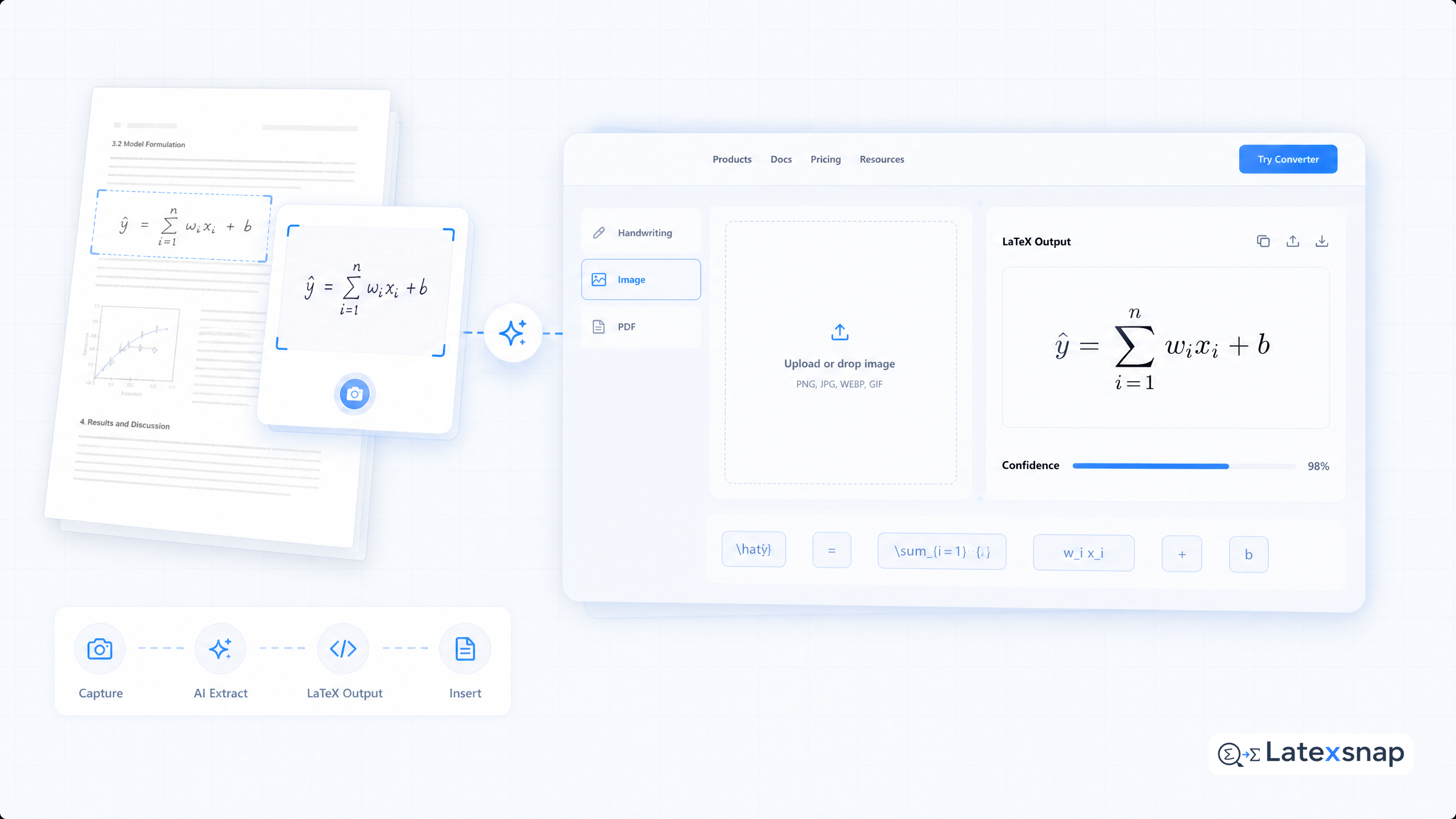
Convert formulas faster
Turn screenshots, handwriting, and PDFs into editable LaTeX.
