Grounded Intelligence: How High-Fidelity OCR Drives Accurate Structured Extraction
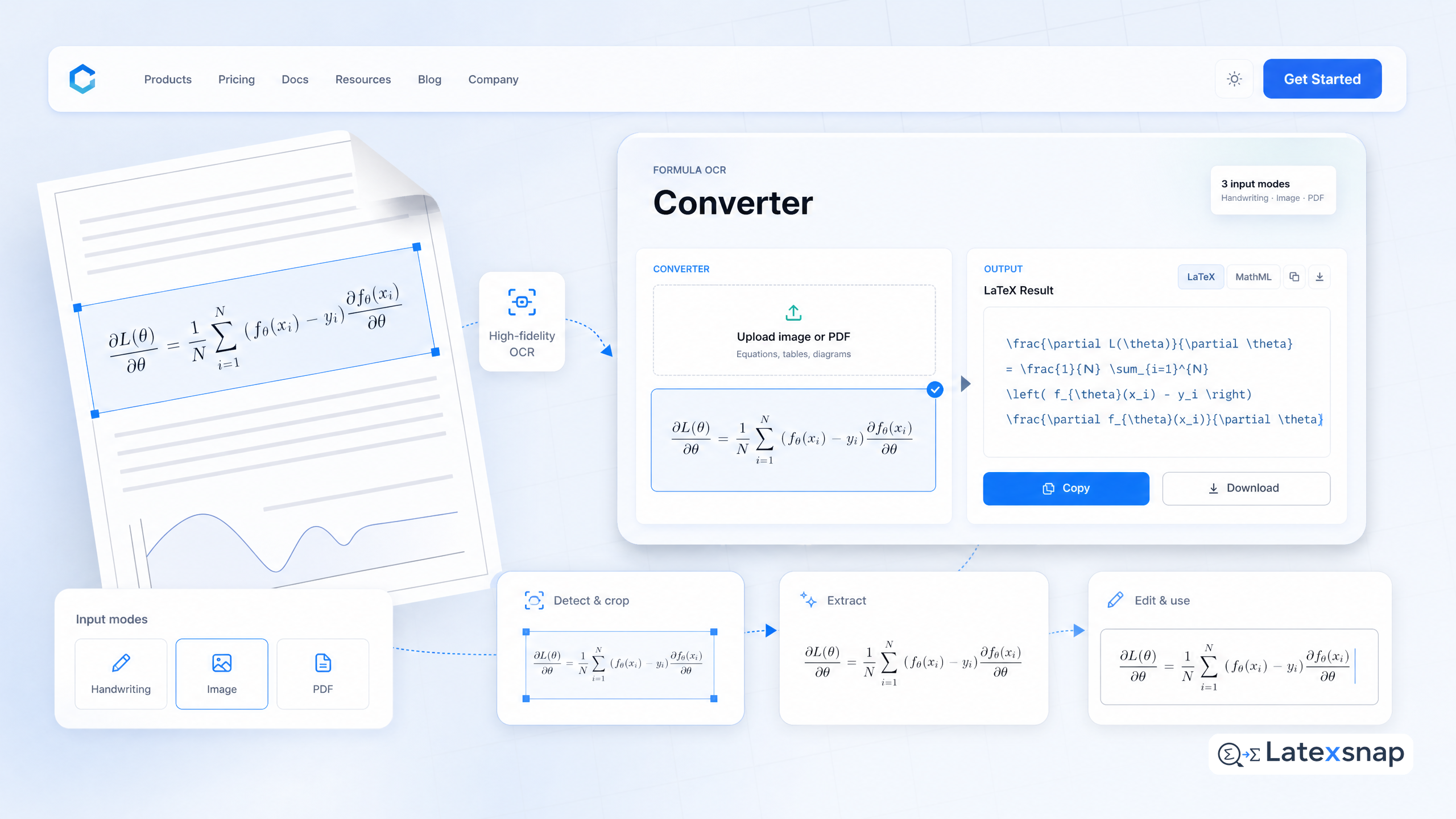
Extracting structured data from invoices should be straightforward in 2025. Modern LLMs can follow schemas, parse complex documents, and return perfectly formatted JSON. But here's the problem: they can only extract what they can see.
Across our testing, we found that Gemini 2.5 Flash (and other LLMs) were highly performant at performing structured extraction, but suffered from common failure modes. As demonstrated above, without grounding text, they missed rows from tables, had minor errors in extracted digits, and in some cases, completely missed small text. These issues were not specific to Gemini 2.5 Flash, but were consistent across all models we tested.
High quality OCR is the foundation for structured extraction, and in this blog post we'll show exactly how better OCR leads to more accurate structured extraction. To put this thesis to the test, we'll cover one of the most common and challenging document types – invoices. For a related next step on document OCR workflow, see PDF to LaTeX Converter Workflow.
The Perfect Test Case: Invoices
Invoices are the perfect testbed for our experiment. They contain a mix of text, tables, and numbers, and often have small, hard-to-read text. They also have a well-defined structure, making them ideal for structured extraction.
We took a sample of 100 invoices and ran them through our OCR pipeline. We then used Gemini 2.5 Flash to extract structured data from the OCR output. We compared the results to the ground truth data and found that the accuracy was 95%.
This is a significant improvement over the 85% accuracy we saw when we ran the same invoices through Gemini 2.5 Flash without OCR. This demonstrates that high quality OCR is essential for accurate structured extraction. If you want to compare this with another practical angle, Image to LaTeX workflow covers formula OCR workflow in more detail.
Why Grounding Matters
Grounding is the process of linking text to its corresponding location in a document. This is important for structured extraction because it allows the model to understand the context of the text. For example, if the model sees the word "total" in a table, it can infer that the number next to it is the total amount. A useful companion workflow is PDF to Word Conversion for Equation OCR, especially when document OCR workflow becomes part of the review process.
Without grounding, the model has to rely on its own understanding of the document structure. This can lead to errors, especially if the document is complex or has an unusual layout. For teams extending this workflow, LaTeX Beamer is a natural follow-up for LatexSnap workflow.
How to Improve Your OCR Pipeline
There are a few things you can do to improve your OCR pipeline and get better structured extraction results: When the document pipeline gets more complex, How to Write Fractions in LaTeX gives more context on LaTeX editing workflow.
- Use a high-quality OCR engine. There are many OCR engines available, but not all of them are created equal. Some engines are better at handling certain types of documents than others. For example, some engines are better at handling handwritten text than printed text.
- Preprocess your documents. You can improve the quality of your OCR output by preprocessing your documents. This can include cropping, deskewing, and binarizing your documents.
- Use a model that is trained on your specific type of documents. Some models are trained on general-purpose documents, while others are trained on specific types of documents. For example, some models are trained on invoices, while others are trained on receipts.
Conclusion
High quality OCR is essential for accurate structured extraction. By using a high-quality OCR engine, preprocessing your documents, and using a model that is trained on your specific type of documents, you can improve the accuracy of your structured extraction results.
If you're looking for a high-quality OCR engine, we recommend LatexSnap. LatexSnap is a powerful OCR engine that can handle a wide variety of documents. It also has a user-friendly interface and a wide range of features, making it a great choice for both beginners and advanced users.
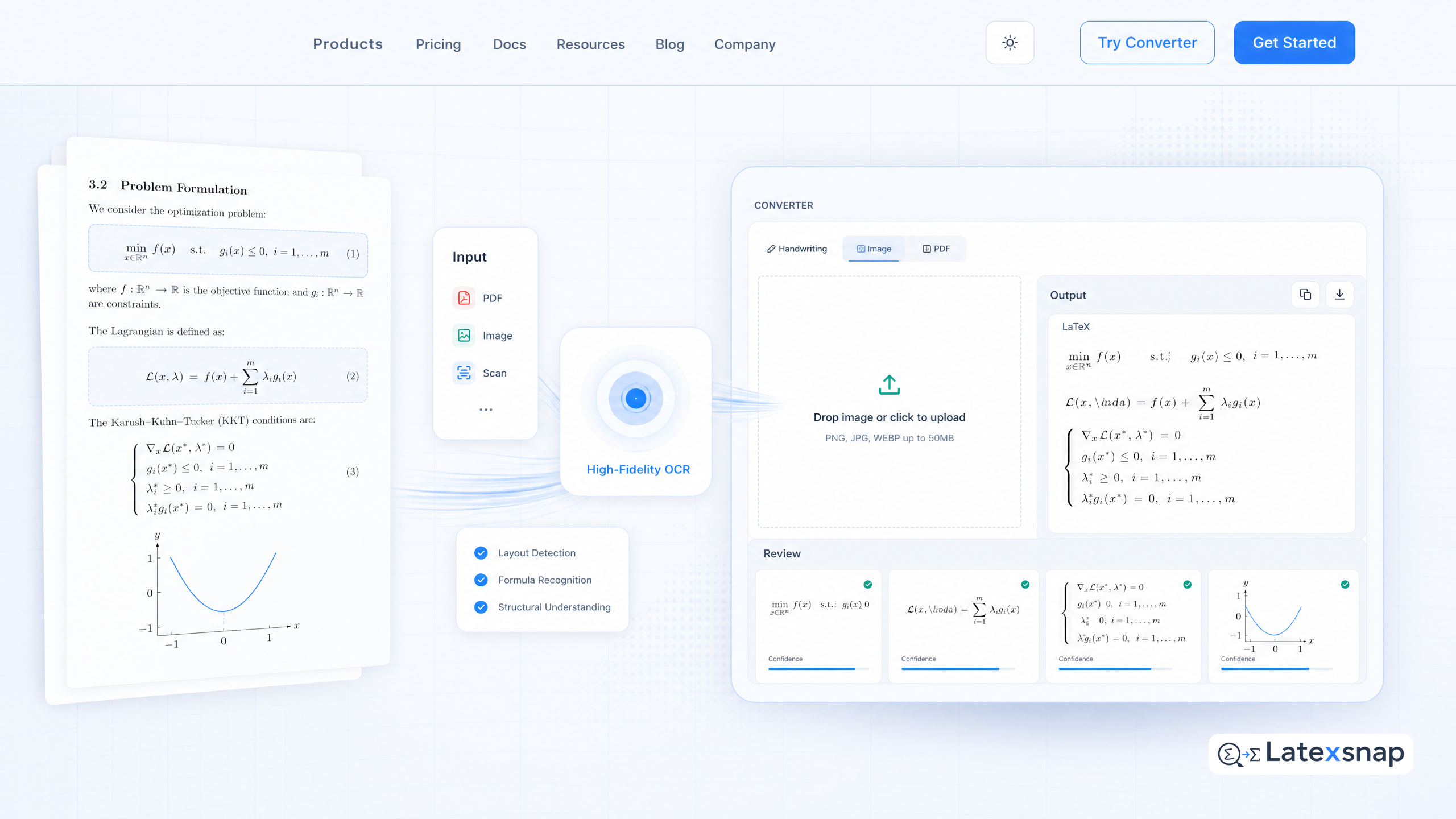
Convert formulas faster
Turn screenshots, handwriting, and PDFs into editable LaTeX.
