AI Writing Assistants for Academic LaTeX Workflows
If you're a student, researcher, or academic writer, you know how much time can be lost wrestling with equations, citations, and formatting. That's where AI writing assistants come in. These tools don't just help you write faster – they help you write better, with fewer errors and more confidence.
But here's the thing: not all AI writing assistants are created equal. Some are great for general writing, but when it comes to academic work – especially if you're using LaTeX – you need something that understands the nuances of scholarly writing.
In this guide, we'll walk through how AI writing assistants can transform your academic workflow, with a special focus on LaTeX users. We'll also share some practical tips on how to get the most out of these tools. A useful companion workflow is LaTeX vs word processors: Which Is Better for Academic Writing?, especially when LaTeX editing workflow becomes part of the review process.
What is an AI Writing Assistant?
An AI writing assistant is a tool powered by artificial intelligence that helps you write, edit, and improve your text. These assistants can suggest improvements, check for grammar and style errors, and even help you generate new content. For a related next step on LatexSnap workflow, see How to Edit LaTeX with AI in a research writing workflow.
For academic writers, these tools are especially useful. They can help you structure your arguments, refine your language, and ensure your work meets the standards of your field.
Why Use an AI Writing Assistant for Academic Work?
Academic writing is different from casual writing. It requires precision, clarity, and a deep understanding of your subject. That's where AI writing assistants can make a big difference.
Here are some key benefits:
- Improved Clarity: AI tools can help you express complex ideas more clearly.
- Faster Editing: Instead of manually checking every sentence, you can let the AI handle the basics.
- Better Structure: These tools can suggest improvements to your overall organization.
- More Time for Research: By automating the editing process, you can focus on what really matters – your ideas.
How AI Writing Assistants Help with LaTeX
If you're working in LaTeX, you know how important it is to get your equations and formatting just right. That's where AI writing assistants can really shine. If you want to compare this with another practical angle, Writing LaTeX Math Equations with AI covers formula OCR workflow in more detail.
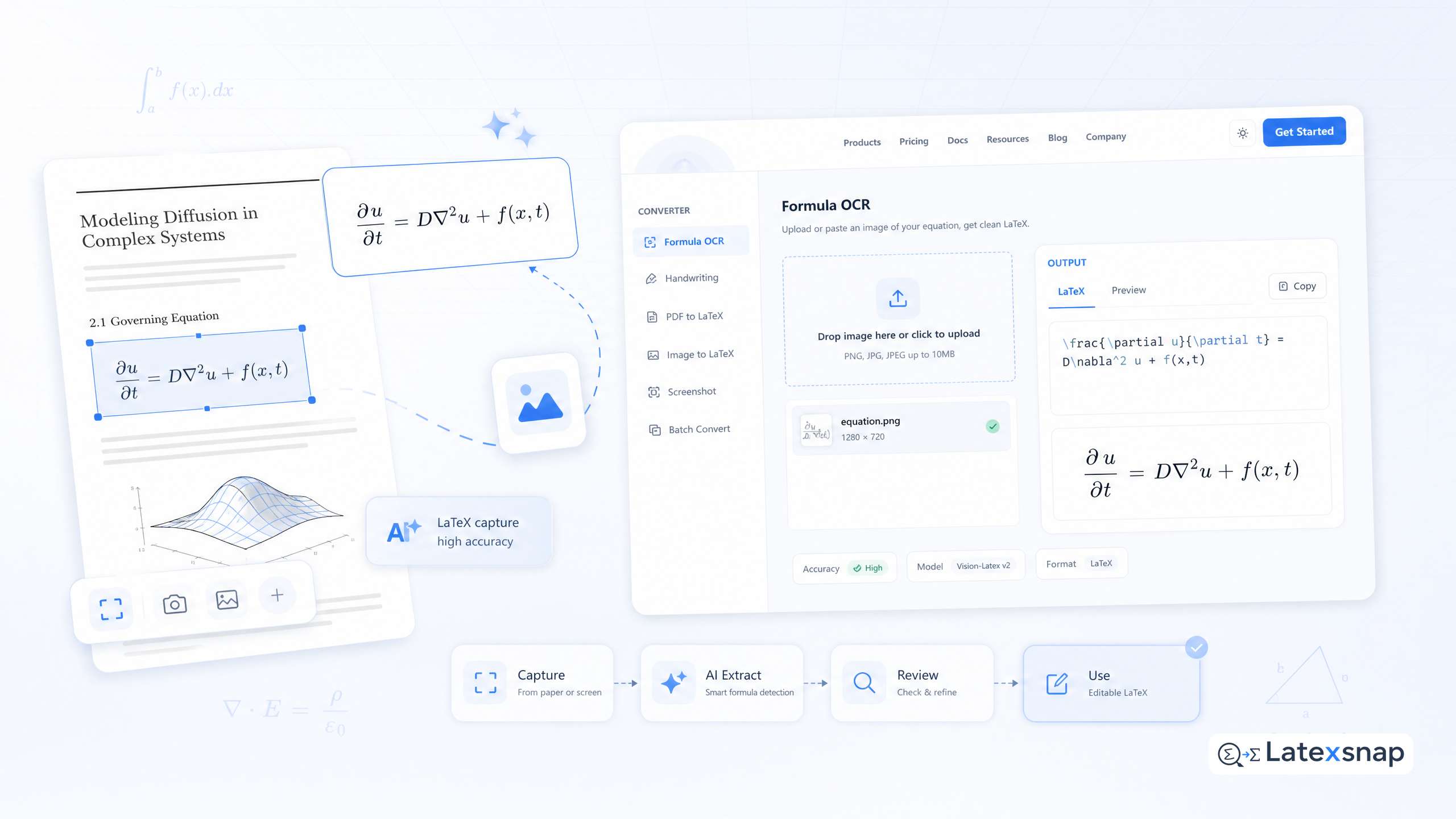
For example, tools like LatexSnap can convert equation images, handwriting, and PDF formula snippets into editable LaTeX code. This means you can quickly turn a screenshot or handwritten note into a properly formatted equation – saving you time and reducing errors. For teams extending this workflow, PDF to LaTeX Converter Workflow is a natural follow-up for document OCR workflow.
This is especially helpful when you're working on complex mathematical or scientific papers. Instead of manually typing out every equation, you can use AI to handle the heavy lifting.
Tips for Using AI Writing Assistants Effectively
While AI writing assistants are powerful, they're not magic. To get the best results, you'll need to use them wisely. Here are a few tips:
1. Review the Output
AI tools can make mistakes, especially with technical content. Always review the output carefully, especially for equations and citations. When the document pipeline gets more complex, How to Keep Citations and LaTeX Equations Organized in Research Notes gives more context on citation and equation notes.
2. Use High-Quality Input
If you're using tools like LatexSnap to convert images or PDFs, make sure the input is clear and well-cropped. Poor-quality input can lead to errors in the output.
3. Understand the Limitations
AI writing assistants are great for improving your writing, but they can't replace your expertise. Always double-check the content, especially for technical accuracy.
4. Combine with Other Tools
AI writing assistants work best when used alongside other tools. For example, you might use an AI tool to draft a section, then refine it with a LaTeX editor or citation manager.
The Future of Academic Writing
As AI technology continues to evolve, we can expect even more powerful tools for academic writing. These tools will help researchers and students write faster, more accurately, and with greater confidence.
But remember: the best tool is one that works for you. Whether you're using AI to convert equations, refine your prose, or structure your arguments, the goal is the same – to make your writing clearer, more accurate, and more impactful.
Final Thoughts
AI writing assistants are transforming the way we write – especially in academic and technical fields. For LaTeX users, these tools offer a unique advantage, helping you manage complex equations and formatting with ease.
By combining the power of AI with your own expertise, you can produce higher-quality work in less time. So why wait? Start exploring the tools that can take your academic writing to the next level.
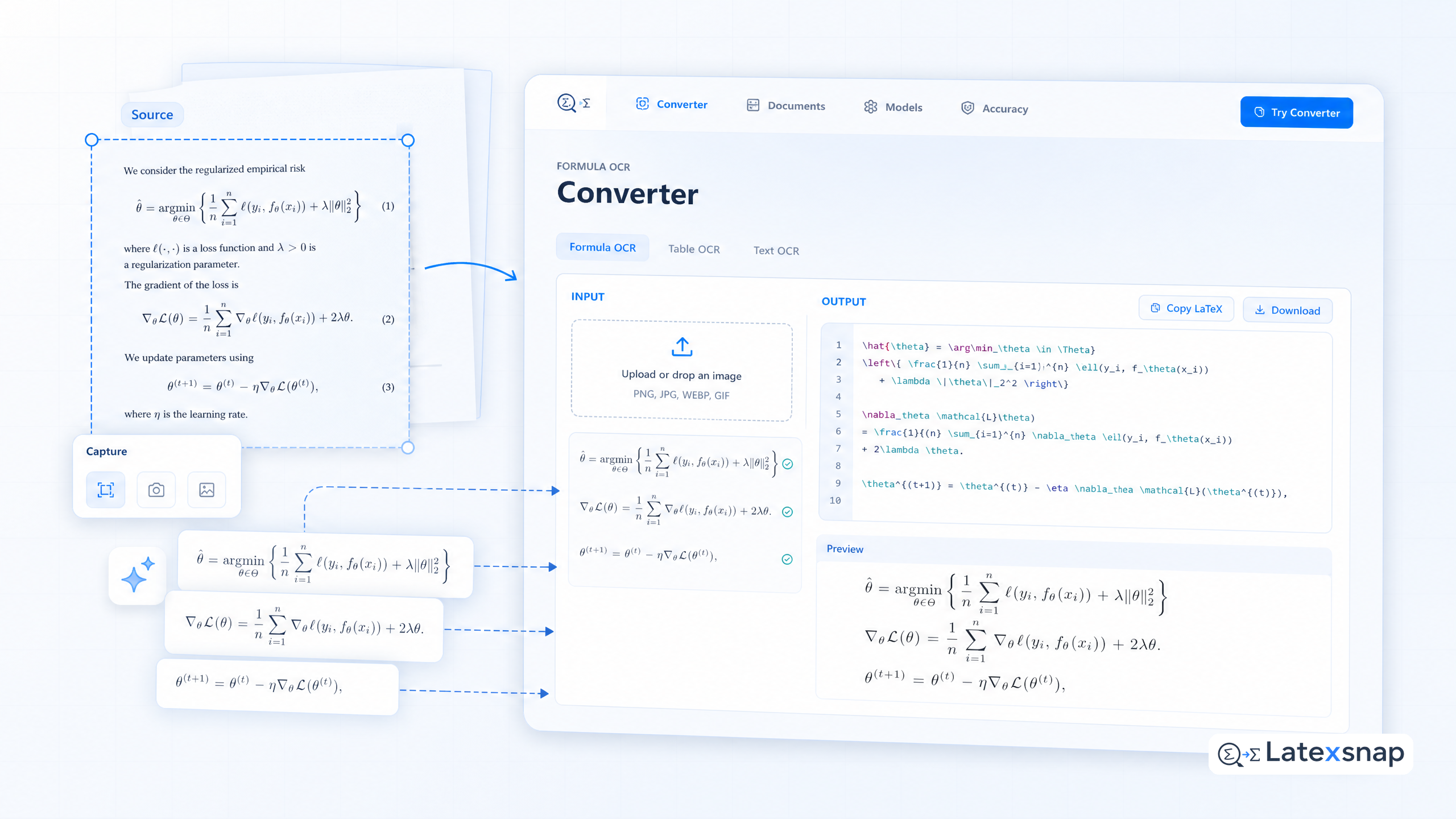
Convert formulas faster
Turn screenshots, handwriting, and PDFs into editable LaTeX.
