LaTeX AI Tools: Comprehensive Guide for Academic Writing
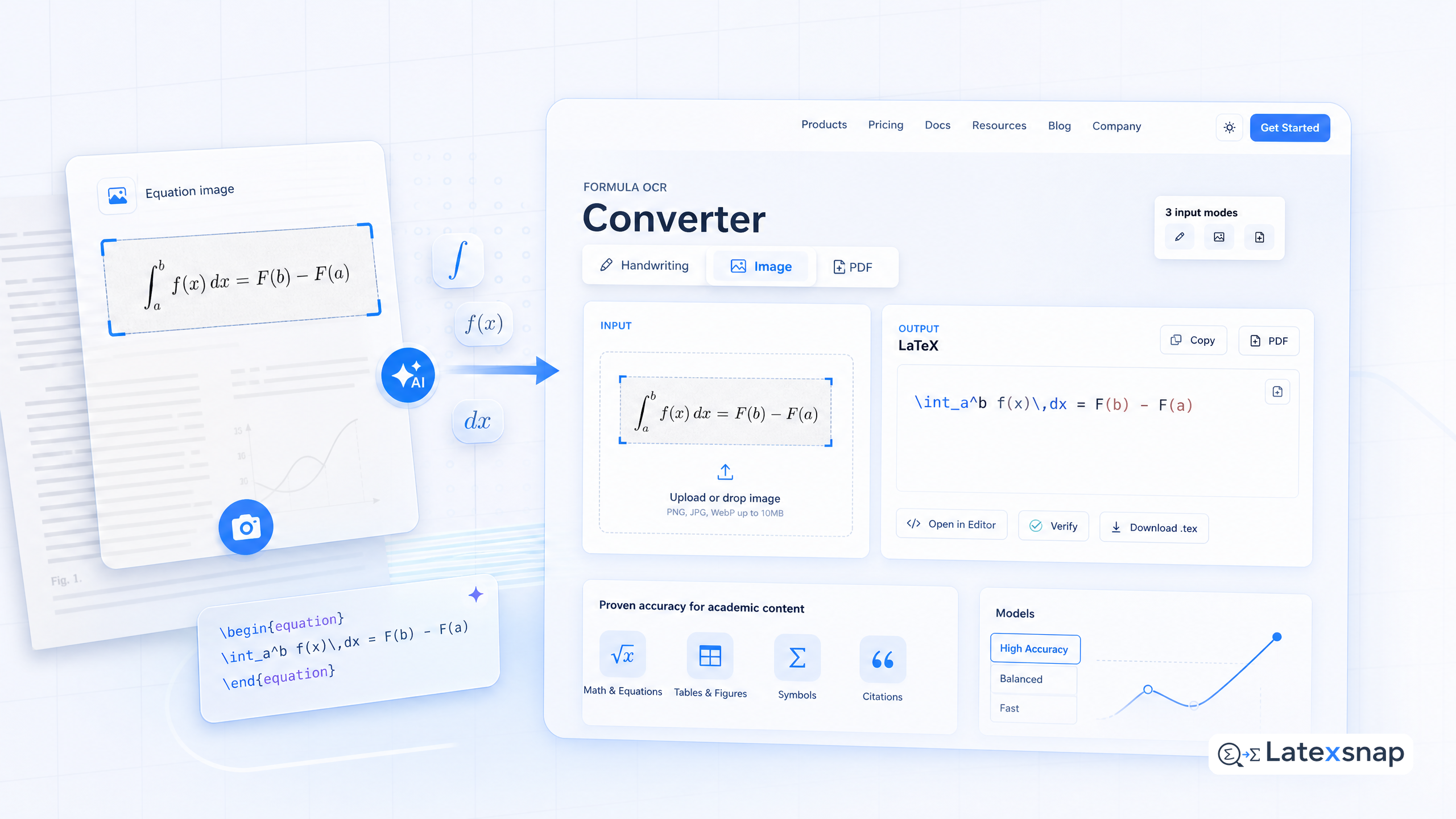
AI-Powered LaTeX Tools: Transforming Academic Writing
The landscape of academic writing is undergoing a significant transformation, driven by the rapid advancement of artificial intelligence. For researchers, students, and technical writers who rely on LaTeX for precise typesetting of complex mathematical and scientific documents, AI-powered tools are becoming indispensable. These tools promise to streamline workflows, reduce errors, and enhance the overall quality of academic publications. In this comprehensive guide, we will explore the most effective AI tools for LaTeX, examining their features, benefits, and how they can be integrated into your academic writing process. A useful companion workflow is AI Writing Assistants for Academic LaTeX Workflows, especially when academic writing workflow becomes part of the review process.
The Future of AI in LaTeX and Academic Writing
The integration of AI in LaTeX tools is rapidly evolving, offering new possibilities for document creation and editing. Some of the most promising developments include:
- Voice-to-LaTeX: Dictate mathematical content directly, with AI converting speech into LaTeX code.
- Intelligent Collaboration: AI-mediated multi-author editing, ensuring consistency and reducing conflicts.
- Content Generation: AI assistance with writing and structure, helping to organize ideas and improve clarity.
- Real-time Translation: Multi-language academic document support, making it easier to share research across language barriers.
These advancements are not only enhancing the efficiency of academic writing but also democratizing access to high-quality typesetting tools. By automating routine tasks and providing intelligent assistance, AI tools are making LaTeX more accessible to a broader range of users. For a related next step on academic writing workflow, see Using AI to Edit LaTeX in Academic Writing.
Top AI-Powered LaTeX Tools for Academic Writing
Several AI-powered tools have emerged as leaders in the field of LaTeX document creation. Here are some of the most notable:
1. LaTeX AI Tools
LaTeX AI Tools is a comprehensive suite designed to enhance the LaTeX writing experience. It offers features such as:
- Automated LaTeX code generation from natural language descriptions.
- Real-time suggestions for improving document structure and formatting.
- Integration with popular LaTeX editors for seamless workflow.
This tool is particularly useful for researchers who need to quickly generate complex equations and figures.
2. AI-Powered LaTeX Editors
AI-powered LaTeX editors are transforming the way academic documents are created. These editors offer features like:
- Intelligent autocomplete for LaTeX commands and packages.
- Real-time error detection and correction.
- Enhanced collaboration tools for multi-author projects.
By reducing the time spent on formatting and debugging, these editors allow researchers to focus more on content creation.
3. AI-Driven Document Management Systems
AI-driven document management systems are revolutionizing how academic papers are organized and shared. Key features include:
- Automated citation management and bibliography generation.
- Smart document version control and collaboration.
- Enhanced search and retrieval capabilities for large document repositories.
These systems are essential for managing the vast amount of data and references involved in academic research.
4. AI-Enhanced LaTeX Templates
AI-enhanced LaTeX templates provide a starting point for creating well-structured academic documents. These templates offer:
- Pre-formatted sections for common document types (e.g., papers, theses).
- Customizable styles and layouts.
- Integration with AI tools for further enhancement.
Using these templates can save time and ensure consistency across different documents.
5. AI-Powered LaTeX Plugins
AI-powered LaTeX plugins extend the functionality of existing LaTeX editors. Some popular plugins include:
- Code completion and suggestion engines.
- Automated formatting and style adjustments.
- Integration with cloud-based collaboration tools.
These plugins can significantly improve the efficiency and quality of LaTeX document creation.
Integrating AI Tools into Your Academic Writing Workflow
To maximize the benefits of AI-powered LaTeX tools, it is essential to integrate them effectively into your academic writing workflow. Here are some strategies: If you want to compare this with another practical angle, How to Edit LaTeX with AI in a research writing workflow covers LatexSnap workflow in more detail.
1. Choose the Right Tools
Select tools that align with your specific needs and workflow. Consider factors such as: When the document pipeline gets more complex, Writing LaTeX Math Equations with AI gives more context on formula OCR workflow.
- Compatibility with your preferred LaTeX editor.
- Features that address your most common challenges.
- User reviews and community feedback.
2. Customize and Train AI Tools
Many AI tools allow for customization and training. Take advantage of these features to tailor the tools to your specific needs:
- Adjust settings to match your preferred writing style.
- Train the AI on your previous documents for better suggestions.
3. Combine Multiple Tools
Combining multiple AI tools can provide a comprehensive solution for your academic writing needs. For example: For teams extending this workflow, LaTeX vs word processors: Which Is Better for Academic Writing? is a natural follow-up for LaTeX editing workflow.
- Use an AI-powered LaTeX editor for document creation.
- Integrate an AI-driven document management system for organization.
- Leverage AI-enhanced templates for consistent formatting.
4. Stay Updated
The field of AI and LaTeX is rapidly evolving. Stay informed about new tools and features by:
- Following industry news and updates.
- Participating in online communities and forums.
- Experimenting with new tools and techniques.
Conclusion
AI-powered LaTeX tools are transforming the way academic documents are created and managed. By leveraging these tools, researchers and students can enhance their productivity, improve the quality of their writing, and focus more on the content of their research. As the technology continues to evolve, the potential for further innovation in academic writing is immense. Embracing these tools now can provide a significant advantage in the competitive landscape of academic publishing.
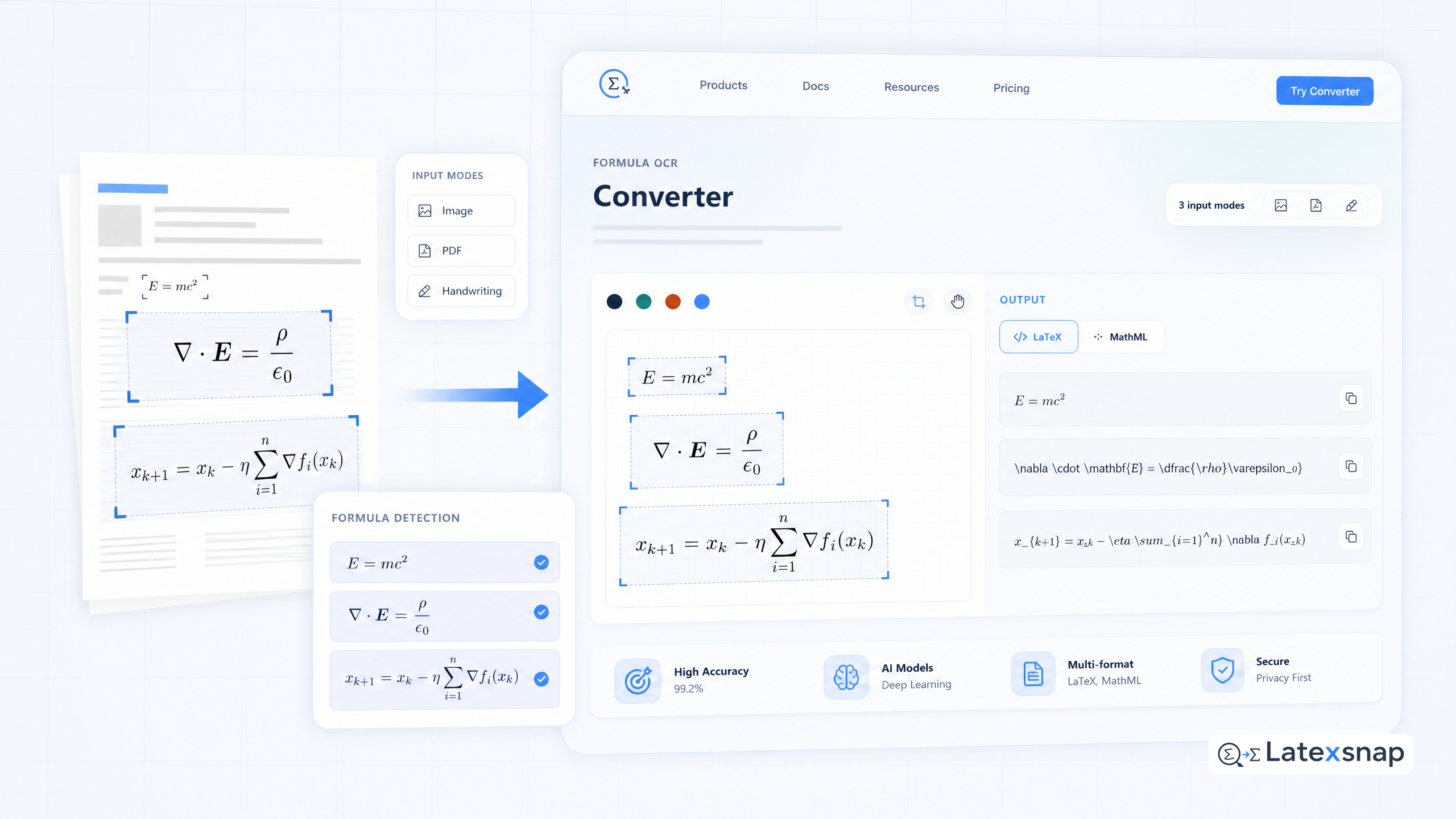
Convert formulas faster
Turn screenshots, handwriting, and PDFs into editable LaTeX.
