Using AI to Edit LaTeX in Academic Writing

Writing academic papers in LaTeX can be a time-consuming process, especially when it comes to formatting equations and ensuring they are properly aligned. However, with the advent of artificial intelligence (AI), this process has become much easier and more efficient. In this article, we will explore how AI can be used to edit LaTeX in academic writing and how it can help researchers and students save time and improve the quality of their work. When the document pipeline gets more complex, Writing LaTeX Math Equations with AI gives more context on formula OCR workflow.
The Benefits of Using AI in LaTeX Editing
One of the main benefits of using AI in LaTeX editing is that it can help researchers and students save time. By automating the process of formatting equations and ensuring they are properly aligned, AI can help researchers and students focus on the content of their papers rather than the formatting. This can be especially helpful for those who are not familiar with LaTeX or who are new to academic writing. A useful companion workflow is AI Writing Assistants for Academic LaTeX Workflows, especially when academic writing workflow becomes part of the review process.
Another benefit of using AI in LaTeX editing is that it can help improve the quality of the work. By ensuring that equations are properly formatted and aligned, AI can help researchers and students avoid errors and inconsistencies that could detract from the overall quality of their work. This can be especially important for those who are submitting their work to journals or conferences, where the quality of the formatting can be a key factor in whether or not the work is accepted.
How AI Can Help Edit LaTeX
There are several ways that AI can be used to edit LaTeX in academic writing. One of the most common methods is to use an AI-powered LaTeX editor, which can automatically format equations and ensure they are properly aligned. These editors can be especially helpful for those who are not familiar with LaTeX or who are new to academic writing, as they can help guide the user through the process of formatting their equations. For a related next step on academic writing workflow, see LaTeX AI Tools: Comprehensive Guide for Academic Writing.
Another way that AI can be used to edit LaTeX is through the use of natural language processing (NLP) tools. These tools can be used to analyze the content of a paper and suggest changes to the LaTeX formatting based on the context of the surrounding text. For example, if a researcher is writing a paper about a specific topic, NLP tools can be used to suggest changes to the LaTeX formatting that are consistent with the terminology and style of the field. If you want to compare this with another practical angle, How to Edit LaTeX with AI in a research writing workflow covers LatexSnap workflow in more detail.
The Future of AI in LaTeX Editing
As AI technology continues to advance, we can expect to see even more powerful features integrated into LaTeX editors. This will further streamline the academic writing process and make it easier for researchers and students to produce high-quality work. One area where we can expect to see significant improvements is in the use of machine learning algorithms to automatically detect and correct errors in LaTeX formatting.
Another area where we can expect to see significant improvements is in the use of AI-powered translation tools to help researchers and students write papers in multiple languages. By using AI-powered translation tools, researchers and students can easily translate their papers into different languages while maintaining the proper LaTeX formatting. This will make it easier for researchers and students to share their work with a global audience and will help break down language barriers in academic writing.
Conclusion
In conclusion, the use of AI in LaTeX editing is revolutionizing the academic writing process. By automating the process of formatting equations and ensuring they are properly aligned, AI can help researchers and students save time and improve the quality of their work. As AI technology continues to advance, we can expect to see even more powerful features integrated into LaTeX editors, further streamlining the academic writing process and making it easier for researchers and students to produce high-quality work. For teams extending this workflow, LaTeX vs word processors: Which Is Better for Academic Writing? is a natural follow-up for LaTeX editing workflow.
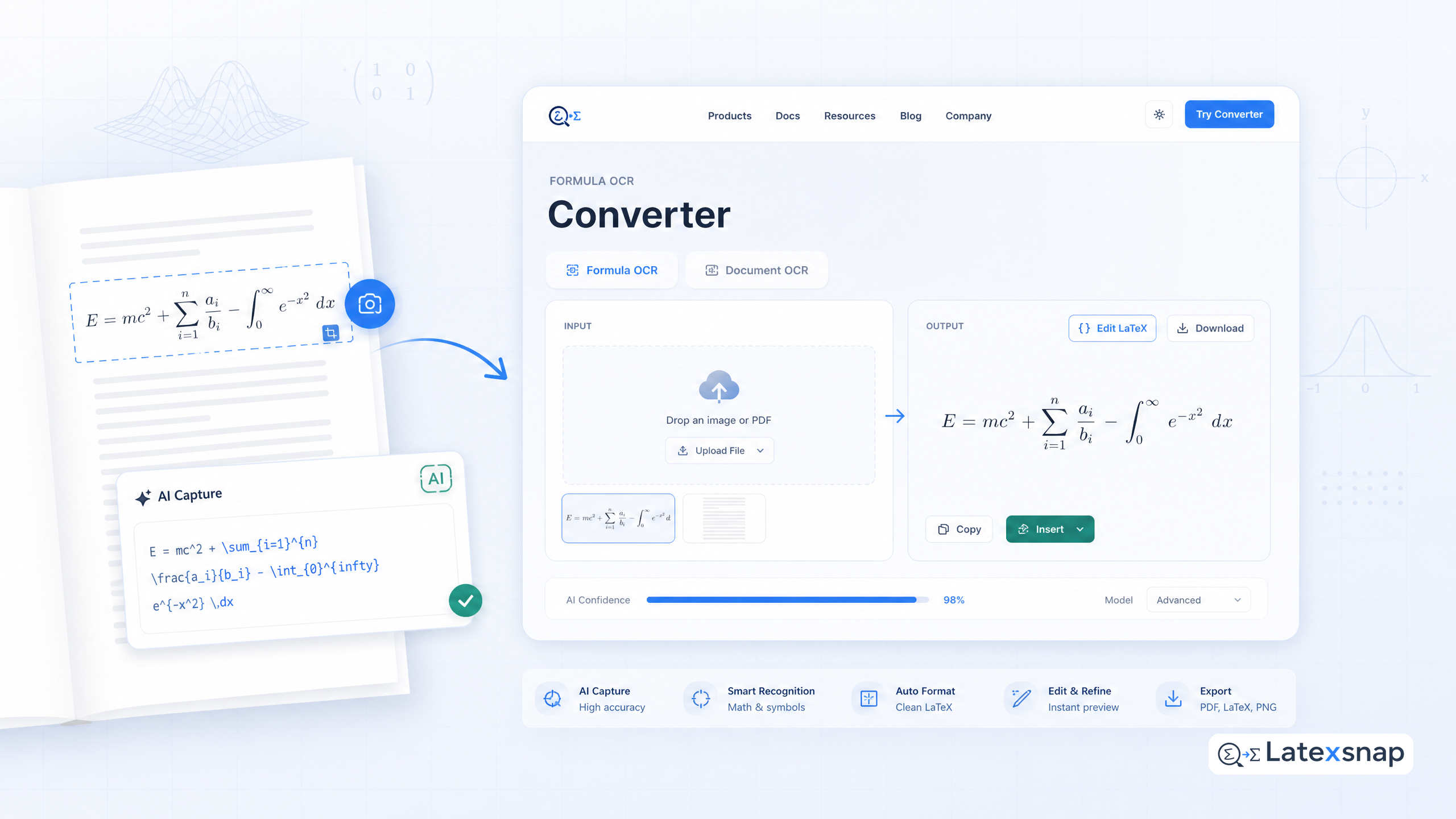
Convert formulas faster
Turn screenshots, handwriting, and PDFs into editable LaTeX.
