AI Drafting for LaTeX Equations

Writing mathematical equations in LaTeX can be a daunting task, especially for those who are not familiar with the syntax. However, with the advent of artificial intelligence (AI), this process has become much easier and more efficient. In this article, we will explore how AI can be used to draft LaTeX equations and how it can benefit students, researchers, educators, and technical writers.
What is LaTeX?
LaTeX is a typesetting system that is widely used for creating documents that contain complex mathematical equations, scientific diagrams, and other technical content. It is particularly useful for academic and technical writing, as it allows authors to focus on the content rather than the formatting. LaTeX is based on the TeX typesetting system, which was developed by Donald Knuth in the 1970s. A useful companion workflow is How to Edit LaTeX with AI in a research writing workflow, especially when LatexSnap workflow becomes part of the review process.
How AI Can Help with LaTeX Equations
AI can be used to automate the process of drafting LaTeX equations, making it easier for authors to create complex mathematical expressions. By using AI-powered tools, authors can quickly and easily generate LaTeX code for their equations, saving time and reducing the risk of errors. For a related next step on LatexSnap workflow, see LaTeX Beamer.
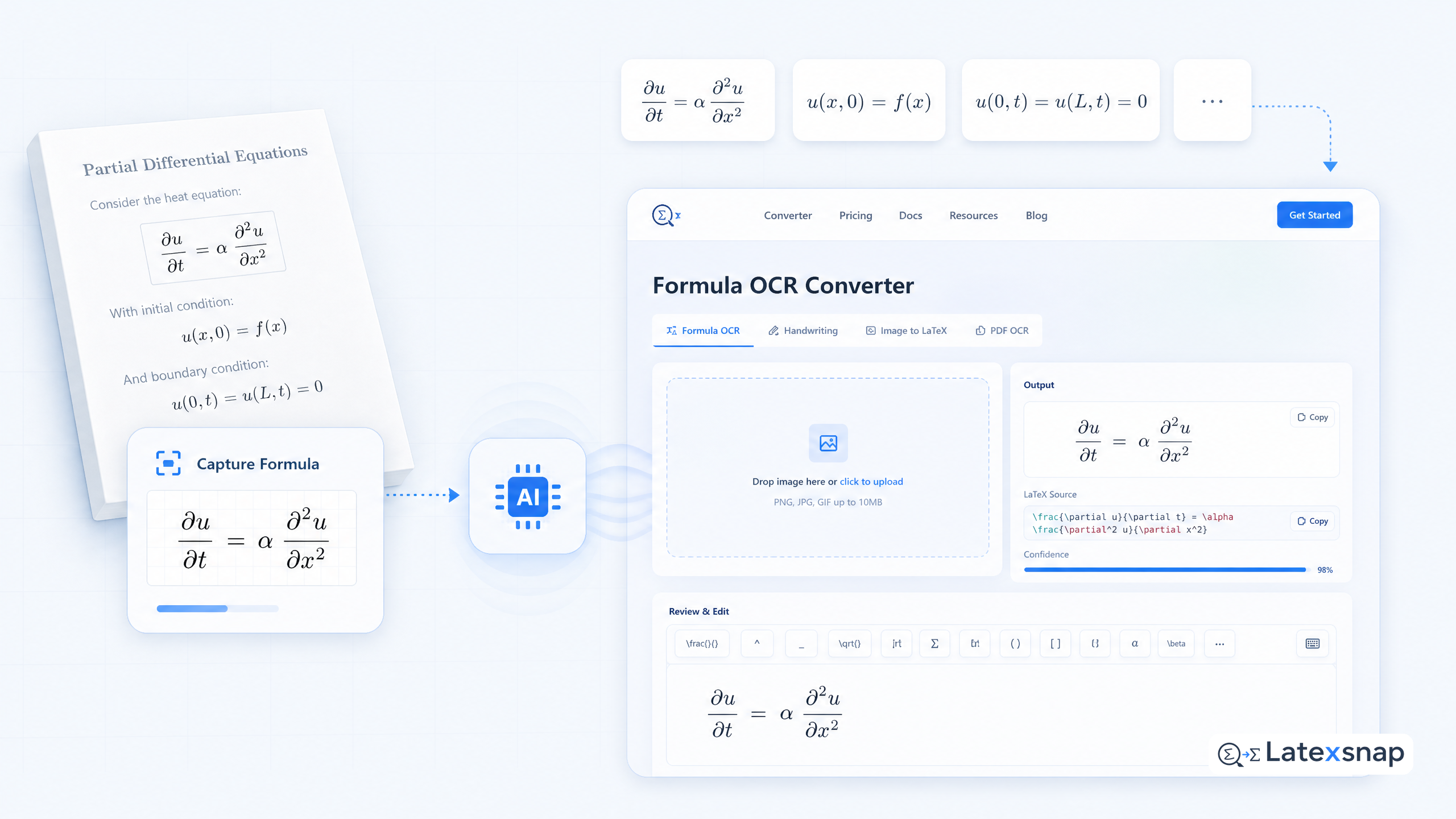
One of the most popular AI-powered tools for drafting LaTeX equations is LatexSnap. This tool uses advanced image recognition technology to convert images of equations into LaTeX code. This makes it easy for authors to create complex mathematical expressions, even if they are not familiar with the syntax.
Benefits of Using AI for LaTeX Equations
There are several benefits to using AI for drafting LaTeX equations. Firstly, it can save time and reduce the risk of errors. By automating the process of creating equations, authors can focus on the content rather than the formatting. This can lead to more accurate and polished documents.
Secondly, AI-powered tools can make it easier for authors to create complex mathematical expressions. By using tools like LatexSnap, authors can quickly and easily generate LaTeX code for their equations, even if they are not familiar with the syntax. This can be particularly useful for students, researchers, educators, and technical writers who need to create complex mathematical expressions frequently.
How to Use AI for LaTeX Equations
Using AI for drafting LaTeX equations is simple and straightforward. Firstly, authors need to choose an AI-powered tool, such as LatexSnap. Once they have selected a tool, they can upload an image of the equation they want to create. The tool will then use advanced image recognition technology to convert the image into LaTeX code.
Authors can then review the generated LaTeX code and make any necessary adjustments. Once they are satisfied with the code, they can insert it into their document and continue writing. If you want to compare this with another practical angle, Typst vs LaTeX covers LatexSnap workflow in more detail.
Tips for Using AI for LaTeX Equations
To get the most out of AI-powered tools for drafting LaTeX equations, authors should follow a few simple tips. Firstly, they should ensure that the image they upload is clear and legible. This will help the AI-powered tool to accurately convert the image into LaTeX code. For teams extending this workflow, How AI Drafting Helps Generate Tables and Equations in LaTeX is a natural follow-up for document OCR workflow.
Secondly, authors should review the generated LaTeX code carefully and make any necessary adjustments. This will ensure that the code is accurate and that the equation is formatted correctly.
Finally, authors should experiment with different AI-powered tools to find the one that works best for them. Each tool has its own strengths and weaknesses, so it is important to find the one that suits your needs.
Conclusion
In conclusion, AI-powered tools for drafting LaTeX equations can be a valuable resource for students, researchers, educators, and technical writers. By automating the process of creating equations, authors can save time and reduce the risk of errors. Additionally, AI-powered tools can make it easier for authors to create complex mathematical expressions, even if they are not familiar with the syntax.
If you are looking for a reliable and efficient way to create LaTeX equations, consider using an AI-powered tool like LatexSnap. With its advanced image recognition technology, LatexSnap can quickly and accurately convert images of equations into LaTeX code, making it an ideal tool for anyone who needs to create complex mathematical expressions. When the document pipeline gets more complex, How to Convert Images to LaTeX Equations gives more context on formula OCR workflow.
By following the tips outlined in this article, authors can get the most out of AI-powered tools for drafting LaTeX equations. So why wait? Start using AI today and streamline your LaTeX equation drafting process!
Convert formulas faster
Turn screenshots, handwriting, and PDFs into editable LaTeX.
